The Power of Strong Teams Are Your Employees Usain or Trevor?
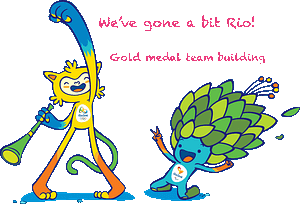
We’ve all gone a bit Rio!
The power of the team mind set is everywhere at the moment. Team GB are busy rocking it in Rio with the medal tally increasing daily. So what can we learn as managers from our Olympians about what it takes to build a gold medal winning teams?
Are they Usain or Trevor?
Are your team members like Usain Bolt or Trevor ‘The Tortoise’ Misapeka? (google him!) Even with the most effective training programmes, scheduling, state of the art technology and more systems and processes than you can shake a javelin at, we are constantly being challenged to improve and become more effective.
One of the main areas where there is still leverage to be had is all too often overlooked; It’s the carbon based aspect of the process that drives it all…the employee! A strong team is one of the most powerful tools a manager has at their disposal.
Companies typically lose 40% of employee performance to stress, low morale, muscular skeletal problems (back pain, RSI etc) and headaches.* These elements will drain even the most willing employee and have a dramatic impact on performance levels. Companies need set and measure wellbeing and engagement KPI’s if they want employees to be delivering gold medal winning performances.
* Data provided from our national wellbeing & engagement surveys
We are so excited at being finalists in the Contact Centre Suppliers Awards that we havent stopped smiling and we want everyone else to feel the same! So,to spread a little happiness we’re offering everyone the chance to win
FREE Massages!
Yes that’s right, a Massage Day Free, Gratis and for nothing!
All you have to do is tell us why your employees should be treated to one of our fabulous Corporate Massage Days at your company
Who ever gives the best reason (in our humble opinion!) wins.
So get thinking, the more inventive the better!
Looking forward to hearing your comments and seeing the videos!!
One of the best things about working at Therapy Solutions is that we get to help some of the most innovative organisations. Companies who are as passionate about their wellbeing and reward programmes and delivering thousands of treatments to hundreds of sites all over Europe like IKEA, Macalpine, Legal and General, and even Russian Meerkats!
The truth is I am never happier than when we are working on a one to one level having feedback from the individual. The employee who doesn’t get the headaches any longer. The employee whose posture is now correct so they don’t get the aches and pains from sitting at their desk. The construction worker whose lower back pain has gone or the employee who feels valued and brags to friends about working for their company because they love where they work.Because Its then, when you hear the individual’s stories that you know you’re really making a difference, employees like Dave!
Dave’s story
When I first met dave back in 2000 he had spent many years as a fit and healthy man serving in the army but had to leave due to an injury. NTL as it was (A Virgin Media site now) were opening a 2000 seater call centre in the town and he took a job there thinking it would be better for him as the role allowed him to be seated. Within just a few months he was having he quite sever back and hip pain that he was finding quite debilitating, to the point where he was considering leaving the job as it was becoming a real problem for him.
Fortunately for Dave the the company had booked massage sessions twice a week for all their staff. I was still working hands in those days so having given him a massage at his desk I was able to feel the area of tension and this, along with looking at his workstation and chair position I advise him on how to improve his posture.
The company also operated a hot-desking policy which meant never getting the same chair twice so it was crucial that he understood the importance of sitting correctly. I taught him the basics of our simple 60 second posture routine called Sitright so whatever the chair he could sit correctly.
Within 3 weeks of doing this his pain had disappeared…. not long after I moved to an admin role and left the ‘hands on’ side of the business just visiting the site occasionally to meet up with managers. Over 12 years later he spotted me on site and told me how the massage had made him pain free and allowed him to keep his job.
Its about making the difference
It’s when you hear stories like that you know that as a company we are truly making a difference not only to individuals like Dave but also to our clients. Its very difficult to measure the impact of a situation like that, where do you start?
Well, Dave worked in a large contact centre and they have one of the highest attritions rates running at about 24% some times as high as 40% with the average drop off point being 18 months. With direct recruitment costs running at around 3,000 and hidden costs increasing it to a more realistic £6000 you could argue that over the last 15 years we have potentially saved the company in the region of 50,000 in recruitment costs alone for an investment of a few hundred pounds. That is without any potential litigation which could mean a 6 or even 7 figure sum.
Loyal, engaged and happy!
But the most important aspect is that they have retained a now very loyal, engaged and happy member of staff who is still there and has a wealth of knowledge available he’s is also more productive because who works well when they are in pain? All of that is this is priceless for a company but it is impossible to account for it on a spreadsheet. And that’s because very often it what really counts just can’t be counted! Hear Dave tell his own story in the video clip below
I must confess, when I unwrapped one of my Christmas presents to see a colouring book I thought my mother had lost the plot!
Turns out that colouring books for grown ups are all the rage as a stress reducer for adults, and having sat down and made a start I must confess I’m a colouring convert!
It’s not about the Colouring!
Of course it’s not really about the colouring despite all my efforts to stay within the lines!
What I’ve realised is that I’m addicted to the calm not the colouring.
It relaxes the amygdala, commonly known as the the fear centre of the brain, so it allows your mind to ‘stand down’ and get some well needed rest, even if it’s just for ten minutes.
Hit the Refresh Button
Any activity that allows you to relax and change focus even for just a few minutes can have an enormous impact on the rest of your day.
It calms the mind and after a long day sitting at a computer screen it gives you something to help you switch off and reduce our workplace stress.
Quieting the Brain Chatter
I can’t remember that last time I sat down and did something so completely mindless, no need to think, no brain required (in a good way!) and yet so totally absorbing. Taking even just short break quietens my ‘brain chatter’ and after just 10 minutes I feel refreshed and ready to crack on with the rest of my day.
It’s no wonder this simple pastime has become such a growing craze any short break from our busy lives can have an enormous impact on our stress levels and productivity. While 10 mins of colouring is never going to replace the stress reducing and calm inducing benefits of a 10 min workplace massage it’s a great start. If we can improve our day and be more productive by sharpening our minds while sharpening our pencils, then that for me it’s, quite literally a no brainer.
With the record breaking temperatures workers have been experiencing this week we’ve put together some cool tips for your staff pass them on and keep your workplace a hot head free zone this summer.
Our usual indicator of how hot we are is perspiration but in very hot weather this trigger isn’t always reliable as the perspiration evaporates as quickly as it appears on the skin leaving the skin feeling dry. This can give a false indicator of how hot we really are so be aware, if you are perspiring without realising you will be losing vital fluids that are not being replaced.
1. Drink, drink, drink!
No, not alcohol that will only dehydrate you more!
Drinking plenty of water while you work is always important, but vita in this heat and don’t wait until you’re thirsty, as that means you’re already dehydrated. Dehydration is bad for your looks, health, and productivity at work. Dehydration can cause many problems, including dry skin, skin flushing, fatigue, headaches,
nausea, muscle cramps, and increased heart rate. So keep cool and stay looking and feeling good.
2. Quick cool down
Put your hands in Run your wrists and hands under a cold tap for a minute. Blood vessels are close to the surface of the skin at this point so it’s a quick way to cool your core temperature and it helps cool the blood. You can also use ice if you have it.
3. Shut out the heat
Shut blinds, curtains and shutters first in the morning to prevent a greenhouse effect Studies found that covering windows can reduce heat entering the house by 80%. If it’s safe, open them for ventilation when it is cooler.
4. Dress for the occasion
Wear lightweight, light-coloured clothes made from natural fibles such as cotton linen or silk. Heat is trapped by synthetic fibres,
Keep your head covered when you’re outside and choose flat comfortable shoes with a little give in them as your feet may swell.
5. Get unplugged
Turn off any appliances that are not being used. Phone chargers, computers laptops etc and anything in a standby mode It can reduce room temperature by at least one degree – and every little helps when its sweltering.
If after all of these tips you’re still hot, then eat ice cream, lots and lots of ice cream!
Today is the start of Mental health awarness at work week this is a great article from Business Wales with some quite alarming statistics
Many of us have experienced a mental health problem. Right now, one in six workers in Wales is experiencing stress, anxiety or depression. Stress is not a mental health problem but prolonged exposure to unmanageable stress can cause, or worsen existing, mental health problems. Mental health problems are common and yet most employees don’t feel comfortable talking about mental health at work, often fearing being deemed incompetent or less capable than other colleagues.
Mind commissioned YouGov to poll 1250 workers in England and Wales. We found that of the 14% of those we polled who had a diagnosed mental health problem, fewer than half (45%) had told their current employer. Similarly, staff still don’t feel comfortable telling their employer if stress has caused them to need time off work. Of those who said they’d taken time off sick with stress, just five % said the reason they gave their employer was that they were too stressed to work. The remaining 95% cited another reason for their absence, such as an upset stomach (44%) or a headache (7%).
There is also a perception held by staff that their employers don’t believe that a mental health problem is a valid reason for taking time off. A recent survey by AXA PPP Healthcare found that 69% of managers did not believe mental health problems warranted time off work. While most of us experience stress in our jobs, prolonged exposure to stress can affect your ability to concentrate and make decisions and cause physical and mental health problems including headaches and high blood pressure.
The vast majority of employees experiencing unmanageable stress or a mental health problem can still carry out their role to a high standard, but may need extra support. Employers can only offer additional support if they are aware of any issues staff are facing. As such, organisations need to create an environment which promotes good mental health so staff will feel comfortable talking about any issues. Employees who work within a culture which neglects staff wellbeing will be wary of opening up if they are experiencing issues, potentially leading to bigger problems further down the line, including ‘presenteeism’ – staff coming to work when unwell and not performing at their best.
Under the Equality Act 2010, an employer has a duty to make adjustments for an employee with a disability (including a mental health problem). Adjustments are typically inexpensive and might include offering flexible hours or changes to start or finish time, changes to role, increased support from managers in prioritising and managing workload, and quiet rooms. Supporting staff is more than a legal obligation, it’s part of being a responsible employer.
Thankfully we are beginning to see employers take mental health more seriously and put in place initiatives to support their staff. Attitudes are also starting to change, partly helped by anti-stigma campaigns such as Time to Change Wales. Not only is looking after staff the right thing to do, but it also makes good business sense, resulting in increased productivity, morale and retention.
If you’re an employee worried about your own or a colleague’s mental health or a HR professional interested in improving mental wellbeing in your organisation, Mind can help. Visit our website and you’ll find webinars and a range of free resources which you can read online or download.
HR managers and senior business leaders can nip problems in the bud before they worsen by promoting an open and supportive environment. We want to see all employers create a culture where staff are able to speak about mental health and are reassured that if they do disclose a problem, it will lead to support, not discrimination.
With the warmer weather finally on its way and everything springing into life, I’ll be taking a look at how we can create the ‘Spring effect’ for employees and boost their productivity at the same time.
“I’m going to underperform today!”
Lets face it, no one comes into work and says “I’m going to underperform today!” most employees want to do a good job. As managers we’ve all heard the cry “People are your most important asset” and so know that we should be investing in them and yet many companies are still neglecting this fundamental truth.
It’s all too touchy feely!
If there was a new piece of software or technology that could improve performance by up to *48% most managers would buy it without question, but if it involves investing in the actual employee it can still be perceived as a bit touchy feely… “it can’t have any real impact on performance …can it?” Smart managers know that you can have all the high tech gismos in the world but if the carbon based life form at the end of the process is unmotivated, stressed or feeling drained when they answer a call the customer knows it. All the expensive technology becomes instantly worthless.
Is there anybody there?
No need to hold a séance just yet but many employees will be IN work but not AT work, not truly present, they come in, ‘sit out’ their shift and then go home. For many, their presence and performance is often restricted by the very nature of the job. Commonly employees feel undervalued stressed or are just physically aching and tired.
The 3 major issues that effect employee performance
1. Lack of engagement
2. High levels of stress
3. High levels of muscular skeletal problems (aches and pains)
Tactical and relevant rewards
How many of your current reward or wellbeing programmes tackle these issues? While a box of chocolates, pizza or fruit will always go down well, a deep pan pepperoni or the occasional banana, with the best will in the world, is never going to relieve an aching neck, tight shoulders or reduce stress levels.
The rewards you implement need to be relevant so the employee knows that you appreciate that aspects of the role can be challenging and that you have addressed it. By investing in a tactical and relevant reward programme you can improve morale and engagement levels, reduce stress, boost energy and improve muscular aches and pains.
Engaged, comfortable and awake!
There are 3 fundamental things an employee should be to perform well. Simply put, they need to be engaged, comfortable and awake!
1. Engaged
An engaged workforce will drive business performance and have a direct impact on the bottom line. Engaged employees are people that are highly motivated and vested in the success of their organizations and are willing to make an extra, discretionary effort in their daily work. By incentivising staff with relevant rewards you make them feel valued, motivated and engaged.
2. Comfortable
Many agents (* typically 65% +) complain about muscular aches and pains as well as high levels of headaches affecting them. (How well does anyone work if they are in pain?) Employees frequently describe the level they feel they are working at when they have muscular aches and pains as around 70%. By reducing the impact of muscular skeletal problems and improving agent posture you can quickly and easily boost productivity.
3. Awake
One of the questions asked in our wellbeing survey is How do you feel at the end of an average shift? The word “tired” is used on average in 75% of the answers, along with a variety of more colourful language. The obvious next question is At what point during the day did you lose them? One of the biggest drainers of energy is stress, and one of the main ways to reduce stress is to energise! The more energised, refreshed and focused someone feels the less stressed they are, it gives people the “ability to cope”. By boosting employee energy levels you can ensure that they remain refreshed .
Improve their day, Improve your numbers
By tackling the 3 major issues effecting an agents work life on a daily basis, the work becomes easier to perform. This will then substantially improve employee productivity.
To find out how much performance you’re loosing to low motivation stress and muscular skeletal problems ask about our employee wellbeing survey.
Donna Phillips MICHT MGPBT Head of Happy Healthy Staff Dept Therapy Solutions
* results from national wellbeing and engagement survey
but recent research has chosen the third Monday of January (which this year falls on the 20th) as the most depressing day of the year. More importantly for managers it also has the lowest morale levels and highest sickness absence causing staffing headaches in call centres up and down the UK.
This month we will uncover the best ways to beat the January blues and hear from the Admiral Group to find out what they do to boost morale and energy levels at their award winning contact centres.
Beating the January Blues
Once the tinsel is packed away and the Christmas festivities are a distant memory the January dip kicks in. Motivating and engaging staff can be especially challenging, with the whole country in the grip of the winter blues. With a combination of dark nights, cold winter weather, Christmas credit card bills and failed new year’s resolutions its little wonder employees can feel a little down in the dumps.
Recognising the energy drain
Staff can feel unusually tired, moody, stressed, unfit, achy and in some cases downright irritable. Not the best qualities to have when you are answering calls (often made by customers who are feeling exactly the same!) Combine this with working in artificial lighting, air conditioning systems and seasonally affected disorder (SAD) and you have employees who feel disengaged, unmotivated and generally worn -out.
Boost Performance
This has a big impact on employee performance so take some simple steps to boost energy levels and morale. By generating a positive and optimistic atmosphere in the workplace employees will develop positive and optimistic attitudes and it is ultimately attitude that drives performance and engagement.
At one level sometimes a simple thank you is all it takes but you also need to have structured rewards in place. If you haven’t already organised a reward and wellbeing programme now is the time to do it! Knowing the company cares enough to invest in their health and happiness will instantly boost morale and it will more than pay for itself in the long run. Look for innovative and relevant rewards that deliver the wow factor and avoid the balloons and pizza trap!
2 Get walking
Exercise is a great way to boost energy. Organise a walking group! Map out a few different routes around your area and make them achievable within break times. The combination of exercise, increased exposure to daylight, fresh air and a change of scene will have a marked effect on everyone’s mood. Take the lead and join in, it’s a great opportunity to socialise and chat with people in a relaxed and informal way. (You will be surprised at what you learn!) It’s also a great team building exercise…and it’s FREE!
3 Look forward
Set out the companies vision for the next 90 days; share what’s going to be happening and why. Have a discussion about goals for the team and for them as individuals. If they have personal goals or resolutions support them in achieving them.
This website uses cookies to improve your experience. We'll assume you accept this policy as long as you are using this websiteAcceptView Policy